A skin is ripped off and stolen — and a return to the sea
Where it began
Life under the fridge
Spirals
Not enough hands
When we face our demons and need advice we will seek those who have faced them too
Transformation · Cleansing · Power · True self · Female · A remembering
In selkie folklore a seal slips off its skin and walks ashore. That skin is ripped off and stolen, and the story is the long return to the sea, and to a true self. Transformation, cleansing, power, a remembering — told through bodies, puppets, live-filmed water worlds and a sea made of light.
The main device is micro-cinema, integrated with XR projection. We started to explore the images and themes with the tech in the room — playing with an idea, then seeing what happened. Everything below is what we made.
Puppetry & movement
A physical language for transformation — the moment a seal becomes a woman, and a woman reaches for her skin again.
Micro-cinema
Tiny worlds filmed live in a small submerged diorama, the scene a living, breathing seaweed ecosystem — close-up, intimate, scaled up on screen so small gestures carry the whole story.
Projection & XR
Water, skin and light projected into the space — the sea as a living presence the performers move inside.
As an artist
I'm really interested in micro water worlds and live puppetry animation made in front of an audience. My previous show Moon River was non-verbal, and I want to build on that accessibility — bringing in more of my movement practice and using mocap and motion tracking to expand what puppetry and visual storytelling can be.
Phoebe Hyder
Lead artist
A multidisciplinary puppeteer, creature-FX performer and maker working across theatre, film and television, exploring puppetry, motion capture and XR theatre.
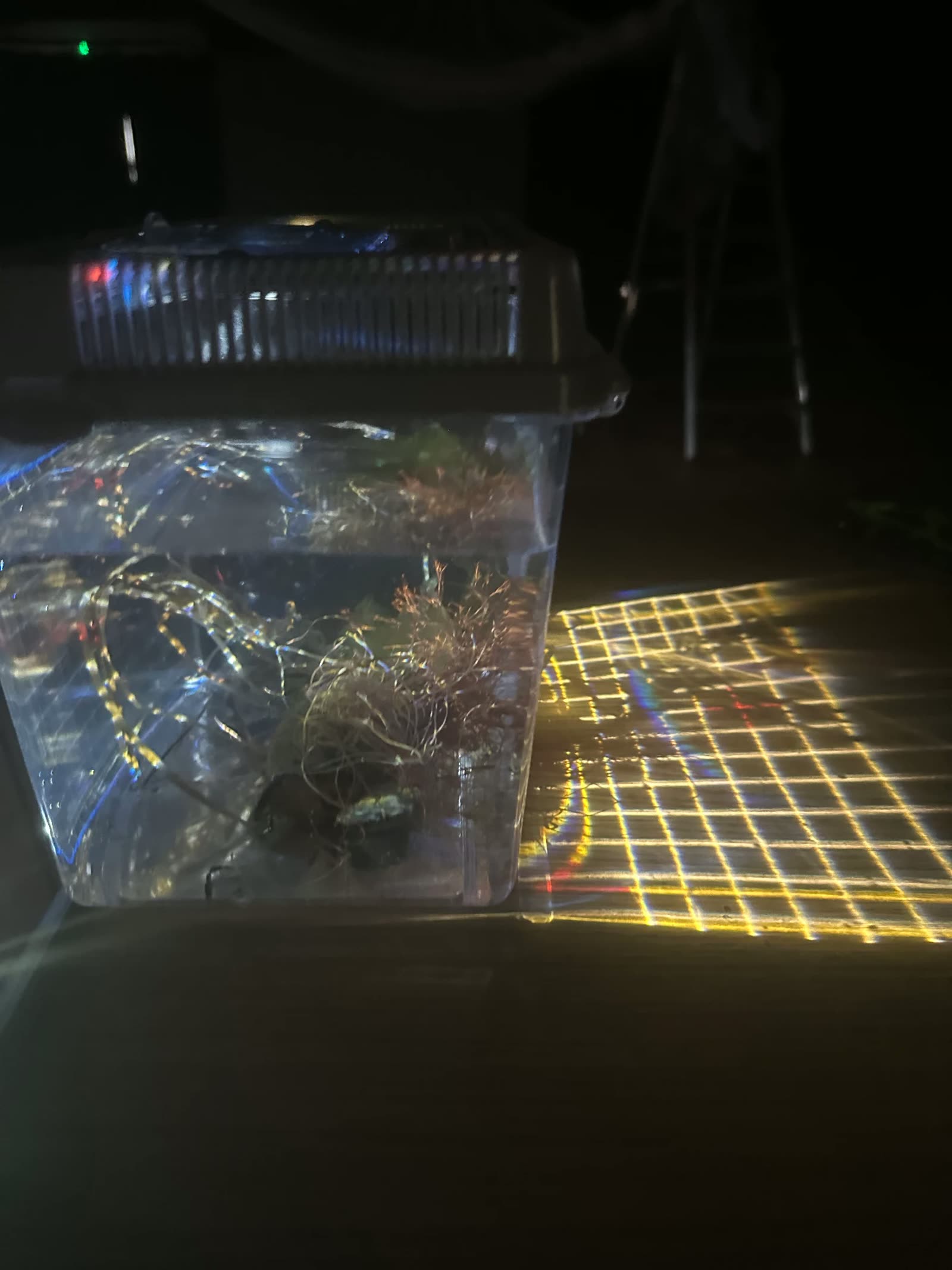
A camera trained on a fish tank of foraged seaweed became both the image and the soundtrack of the room. The tiny, swaying world was filmed live and projected large, so small gestures — a frond uncurling, light refracting through water — filled the whole space as sound and picture at once. We also projected words and images into the tank: light bends through water, glass and seaweed, so a line of text arrives broken, doubled and rippling — a way of asking what creative captioning could be inside the image itself.
Here we are playing with me being inside the image: first looking down on the world from above, the giant looking into a small sea, and then dropping the camera to submerse into the water at eye level, so the audience is in it rather than over it.
Refraction does the work: the tank splits the projector's light into grids, spectra and shadows that fall on the floor and the walls as well as the water. Text caught in that becomes weather — a word swimming, a sentence pulled apart by a frond moving in front of it.
For access this matters. Creative captioning could be projected into the tank and scaled up with the rest of the micro-cinema, so captions are part of the image the whole audience is watching rather than an add-on beside it.
Seaweed in the tank, filmed live.The same tank, projected big.Text projected into the water.Letters bending through water and seaweed.Refracted light spilling past the tank.Projected grid refracted through the tank onto the floor.
02
Hand tracking
Thomas Buckley built a TouchDesigner workflow that tracks a hand in real time and projects that movement straight into the micro-cinema tank. The performer is no longer in front of the light — they are puppeteering the light itself, shaping the seaweed world with a gesture.
Hand tracked live in TouchDesigner.The light follows the hand.Puppeteering the light.Reaching into the tank.Hand, light and water in one image.
03
Seal's eye view
One of the most exciting discoveries of the week. A tiny filmed clip of the performer was projected into the tank, and we played with it merging into a seal — the filmed body dissolving into a swimming animal through cloudy water and gauze. The human figure and the seal read as one creature, the boundary between them softening until the skin was neither. Out of that play a single image arrived: a 'seal's eye view' — looking up through the water at the world above the surface, the earlier micro-cinema re-seen from inside the tank. Scale collapsed: the tiny became the vast, the vast became the close.
Filmed body projected into the tank.Figure and seal blending.Cloudy water and gauze.Looking up through the water.The figure dissolving.Performer and seal, one creature.Seal's eye view, close.
04
Microscope live projection
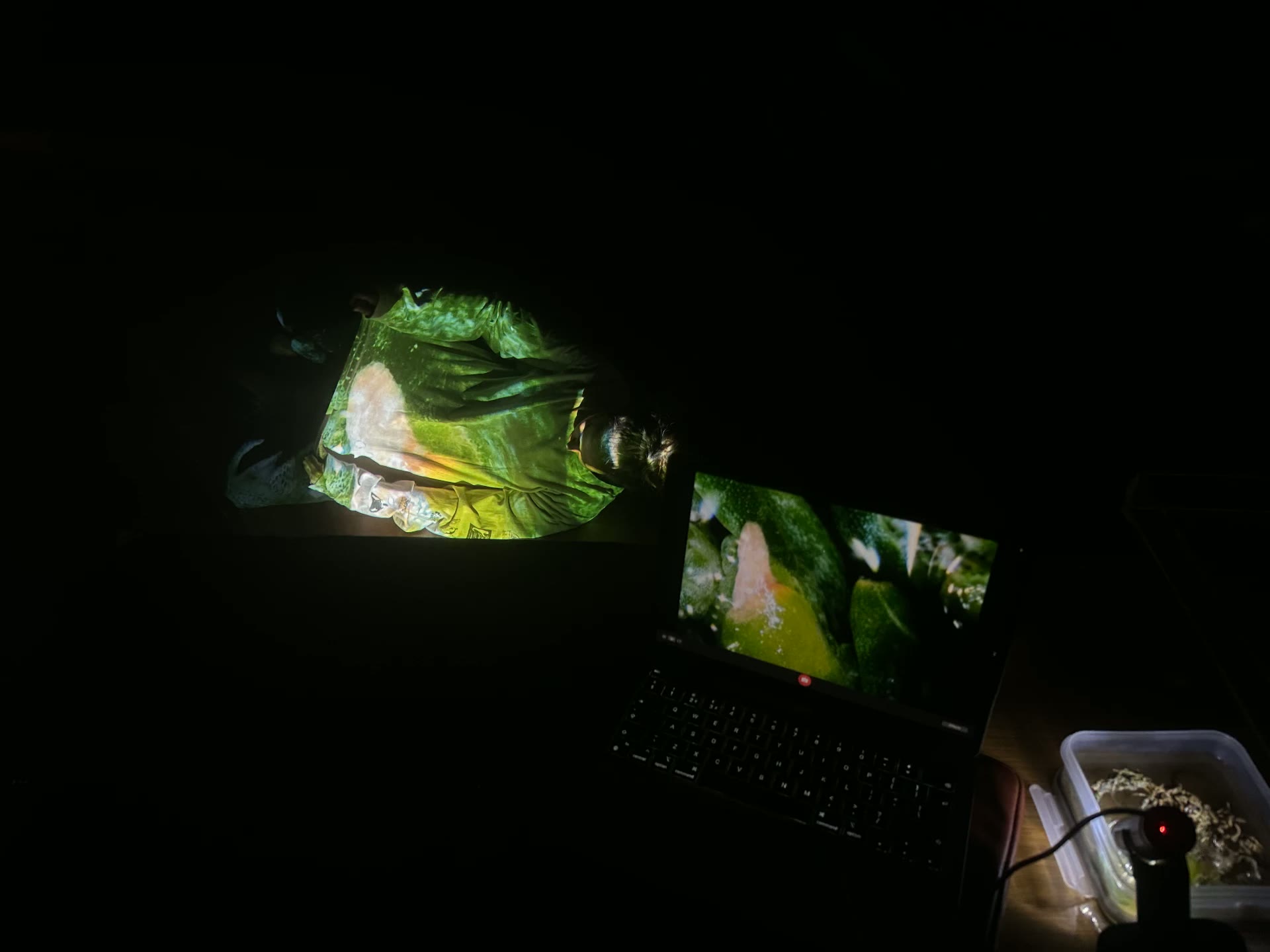
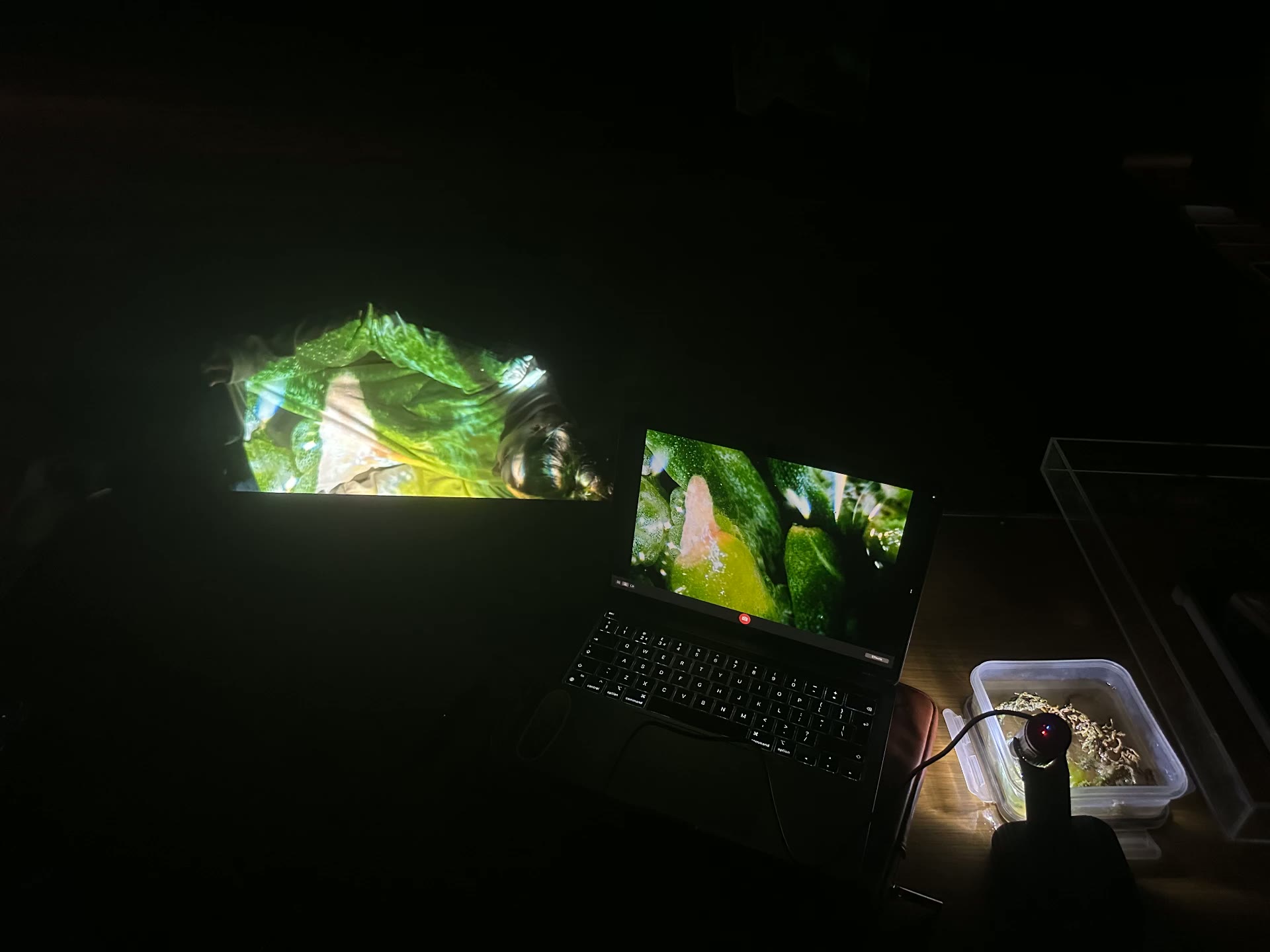
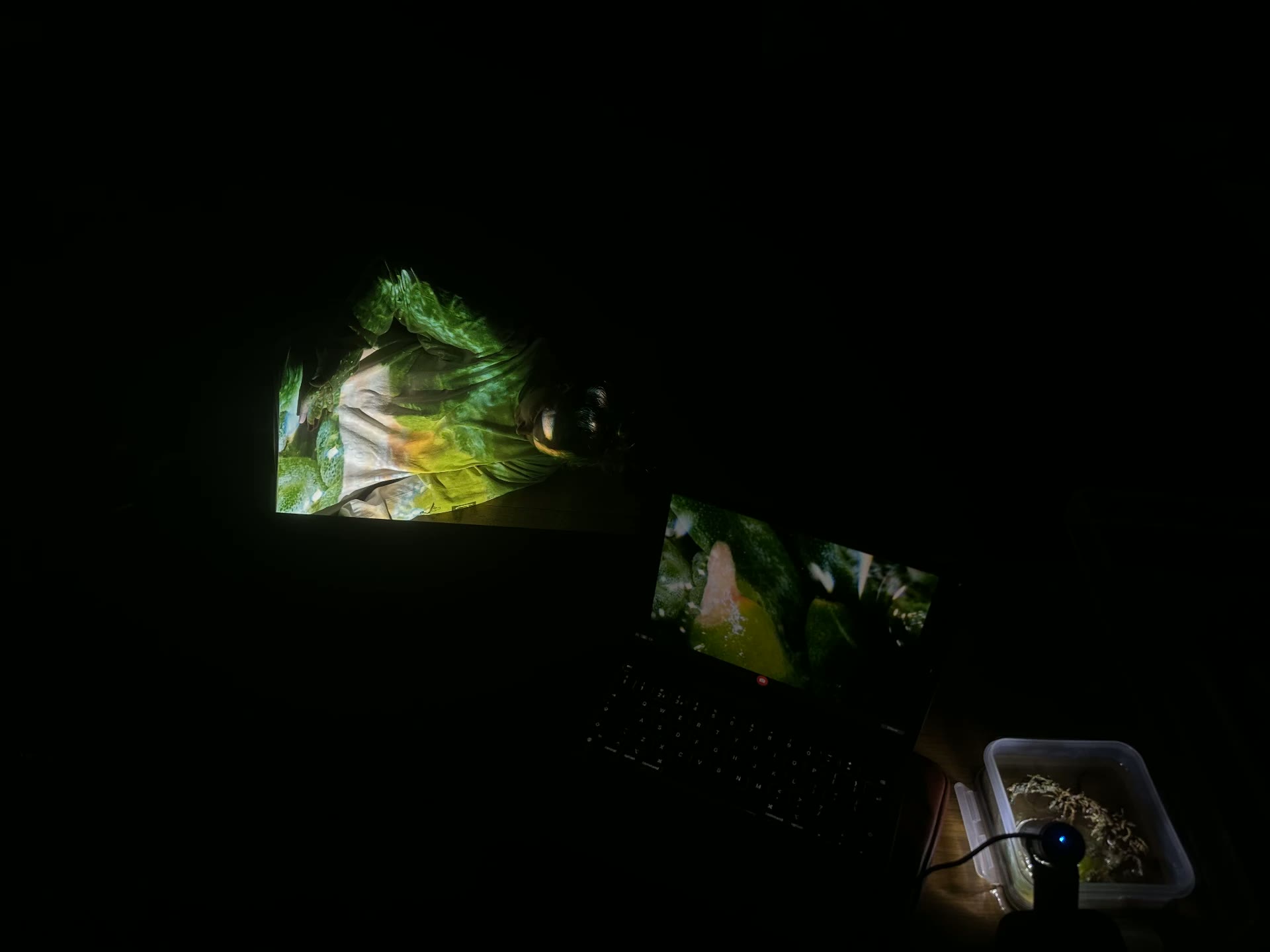
A microscope camera turned the smallest things in the room into a whole landscape: seaweed, sand, tissue-paper skin. We tested ultra-small scale live — magnifying a surface until it read as a coastline — and played with tearing tissue skin away, then laying that magnified world over the landmarks of a body: a wrist, a spine, the back of a hand. Remembering your skin, at the size of a grain of sand.
Live microscope feed.Seaweed and sand, magnified.Tissue-paper skin under the lens.Laptop, water tray, projection.Screen and projection, same image.Magnified seaweed across a body.
Movement
05
Movement
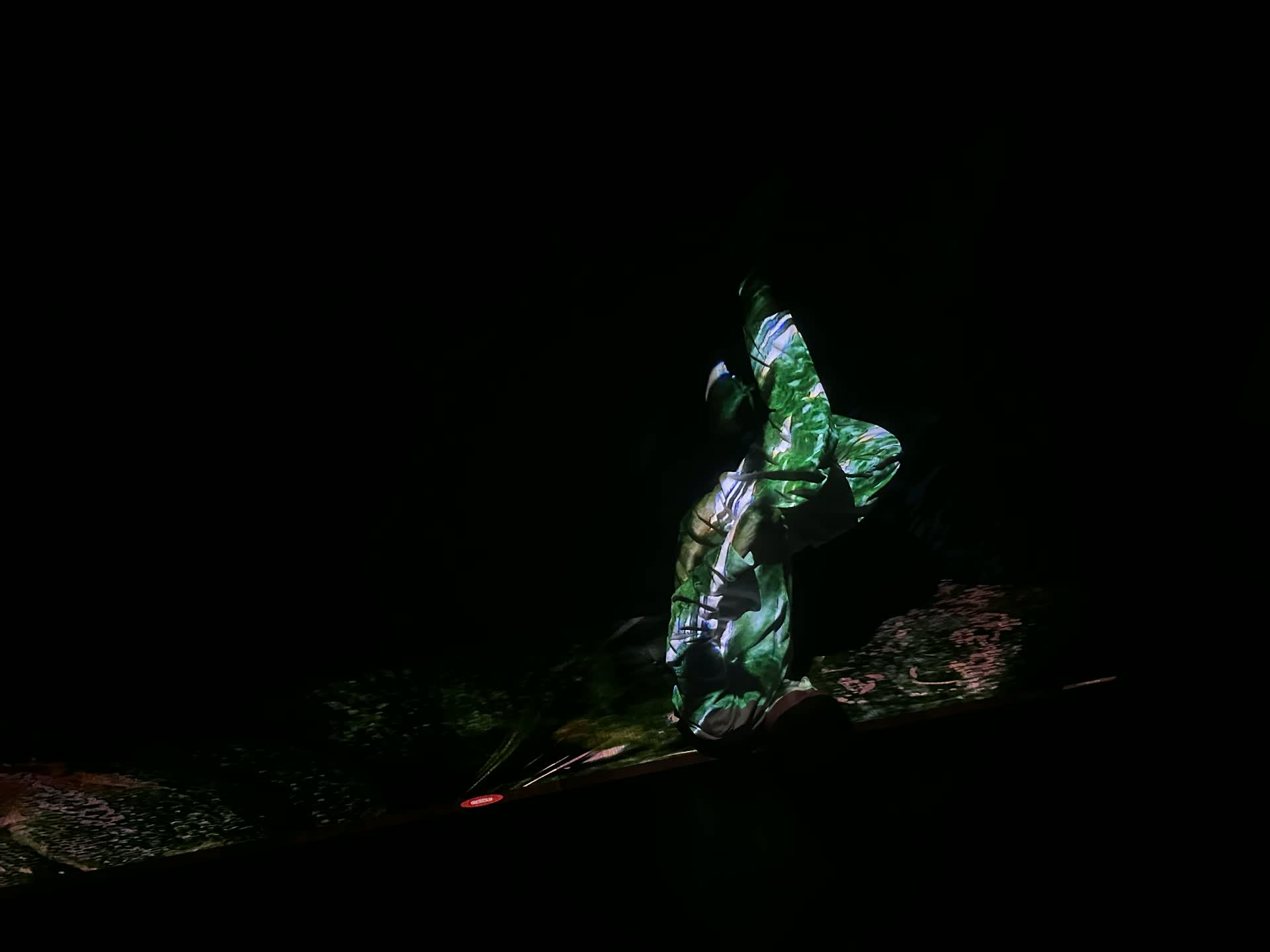
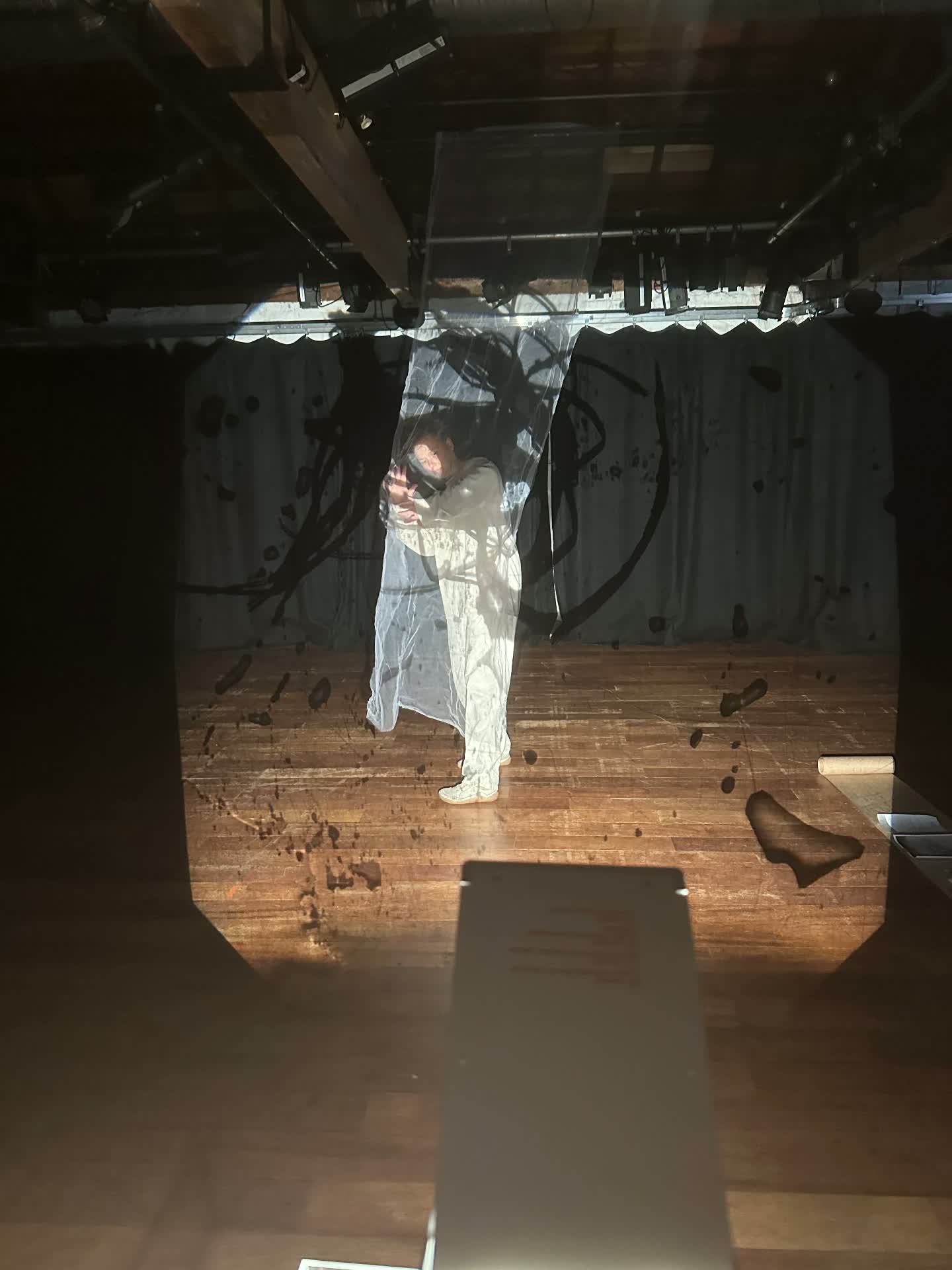
Remembering how to swim — the weightless body carried now inside a human body of weight. We worked on the transform: what are feet, what are legs, when the body is no longer walking land? Gauze wrapped the body and caught the projection, so movement and light became one skin. (Clips are short cuttings from longer takes.)
We explored shadow movements in the body as a kind of remembering, and looked hard at a seal on land: heavy, cumbersome, not elegant — hauling rather than gliding. Feet became the question. What are they, what does it mean to put your weight there, and how do seal movements and behaviours read when they arrive in a human body.
Remembering to swim.The body reaching for the swim, shadow on the wall.Upside down inside projected water.Gauze catching the projection.
06
Shadow skin
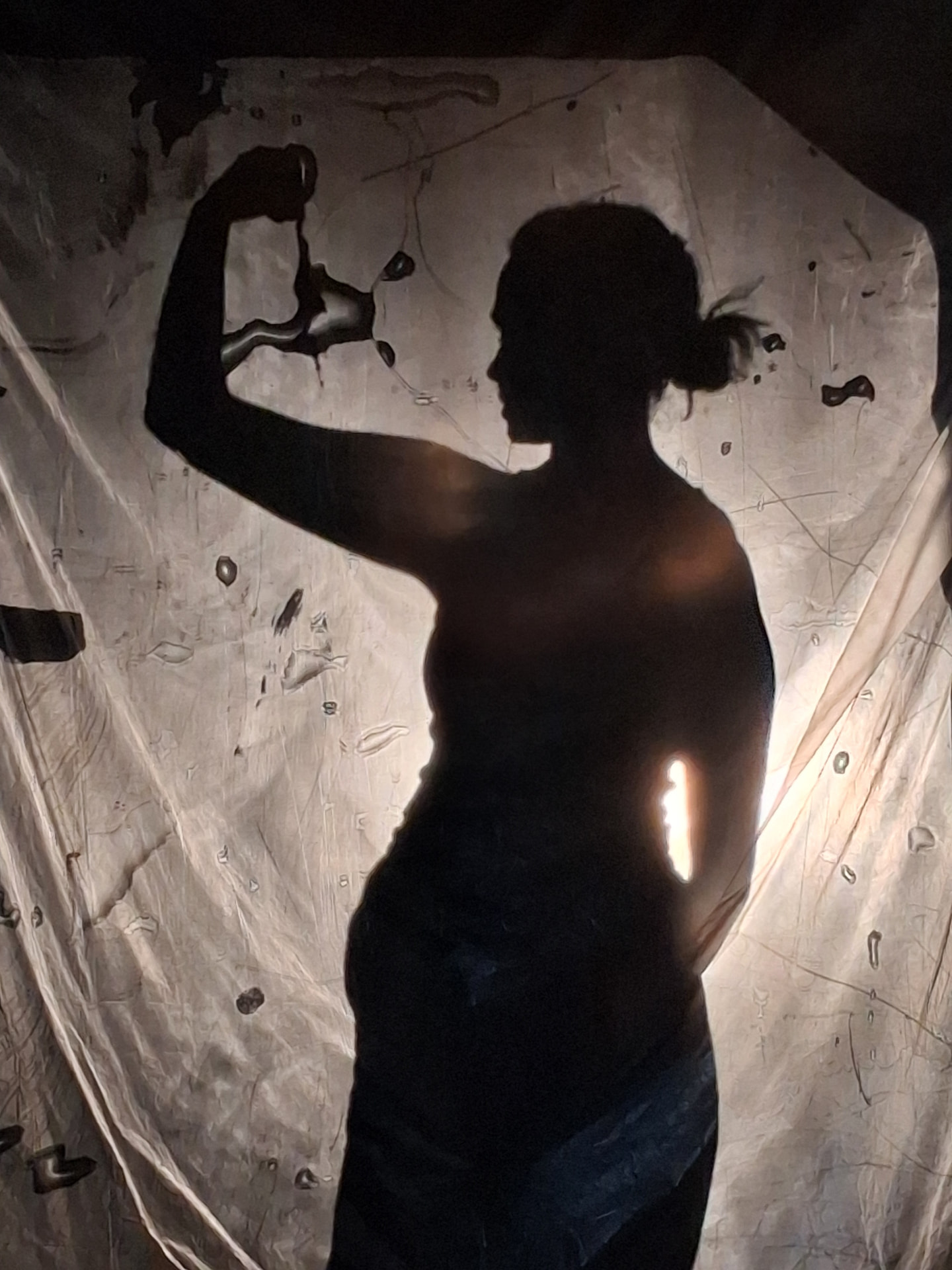
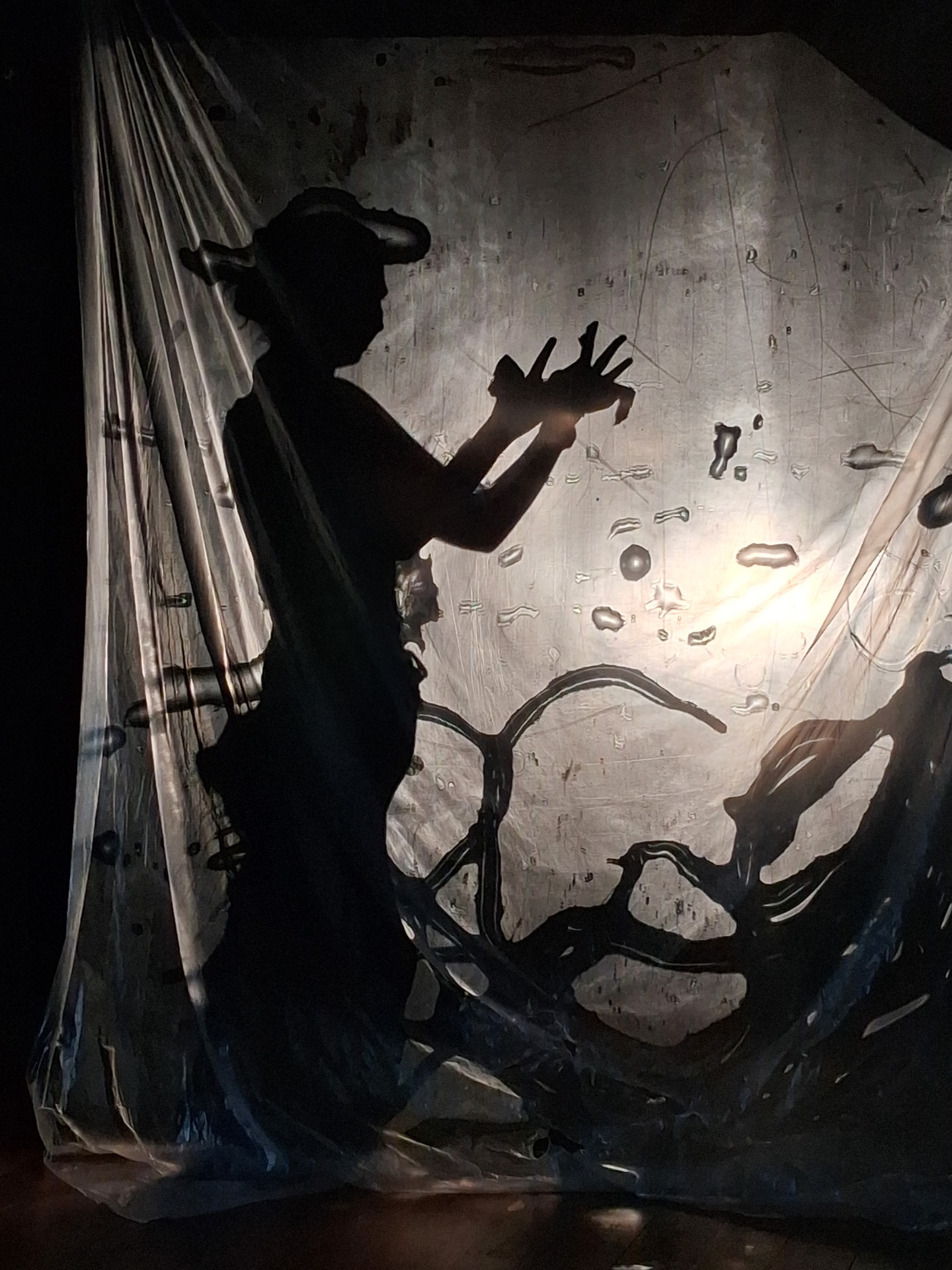
An overhead projector threw a hard light through wet tissue paper, and the tissue became skin — a silhouette pressed against it, peeling away. We were exploring transformation: the gruesome, grotesque moment a body sheds what it wears. There is flesh in this piece, and some of it is horrid to see — an echo of the microscope work. Your skin, and what is that.
The skin was made from wet tissue paper laid across the OHP lens, lit from behind so the figure behind it read only as a dark shape — anonymous, almost a seal — until it began to tear the paper away. The peeling is the transformation: not a clean reveal but a shedding, wet and slow, the tissue clinging and ripping like something that was once alive.
Tissue paper was laid on the skin wet and then peeled off in shadow — and it looked great.
Wet tissue laid on the skin, peeled off.OHP light through wet tissue.Tissue skin pulled off the face.The peel, slow (longer take).Silhouette behind the wet-paper screen.Mid-shed.
Puppetry
07
Puppetry
It isn't a seal — it's a projection-mapped puppet, and the images running across it are recordings of a real seal. Film is laid onto the object so the puppet carries the animal as a memory on its surface, skin flickering between flesh, film and water. That sent us into seal behaviour: how they move, rest, turn, what their habits are, and how much of that can live in a made body.
Projection-mapped puppet, seal footage on its skin.The puppet finds its legs.
08
Prototype puppets
Tiny scale prototypes — rough figures in different materials, built to find out what the R&D puppets actually needed to be. We played with scale and movability: how small a body can read, what a material lets a joint do, where the puppet breaks. Each test told us something the real puppets would have to solve — weight, articulation, how the figure meets the projection rather than just sitting inside it.
First prototype, testing material.Testing how it moves.Finding where it breaks.
Sound
09
Seaweed sounds
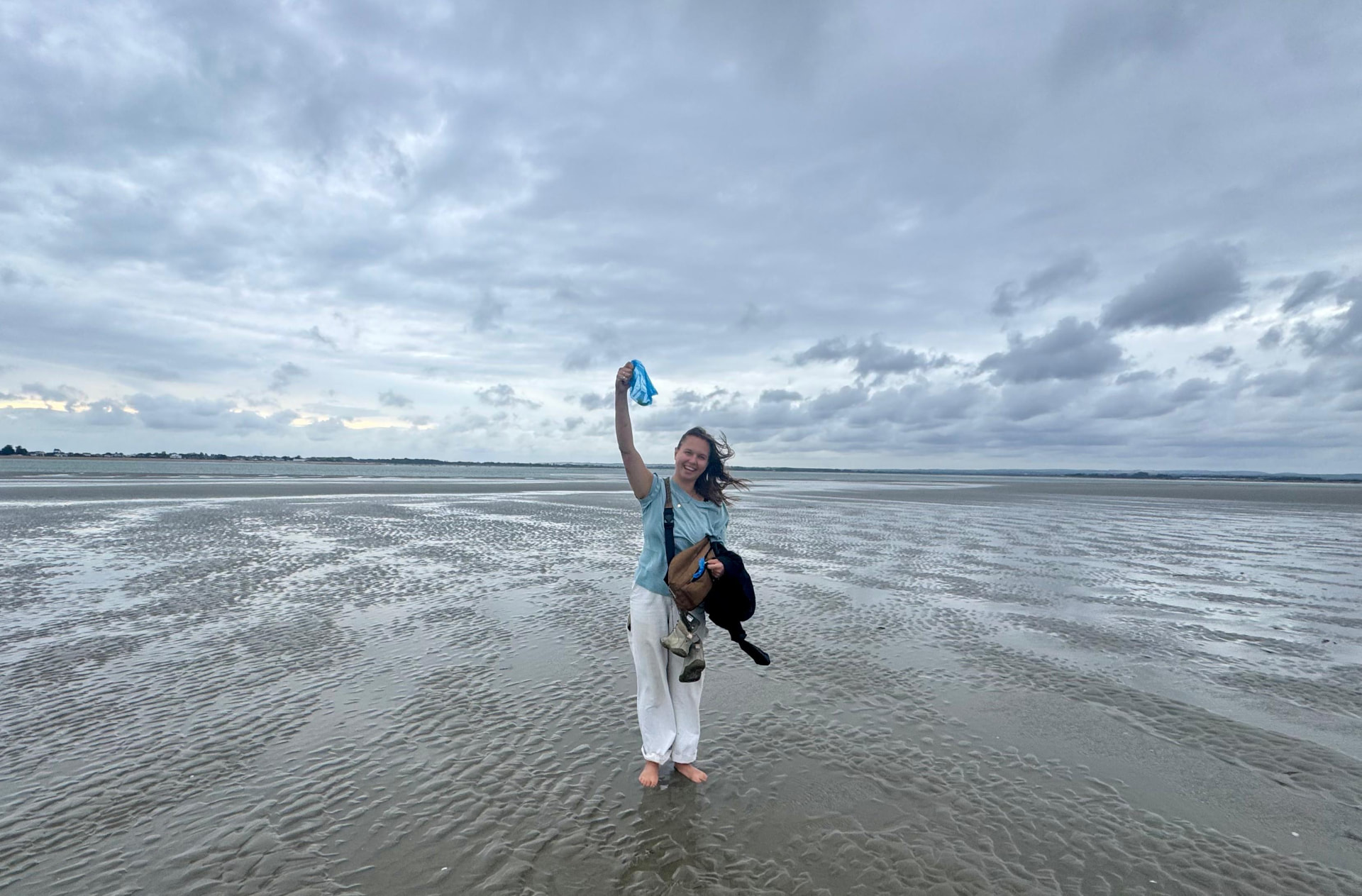
I foraged seaweed from East Head in Sussex and we made the sound of the room out of it — live, from the living plant. The sea diorama in the tank is not a set dressing; it is a living organism playing itself.
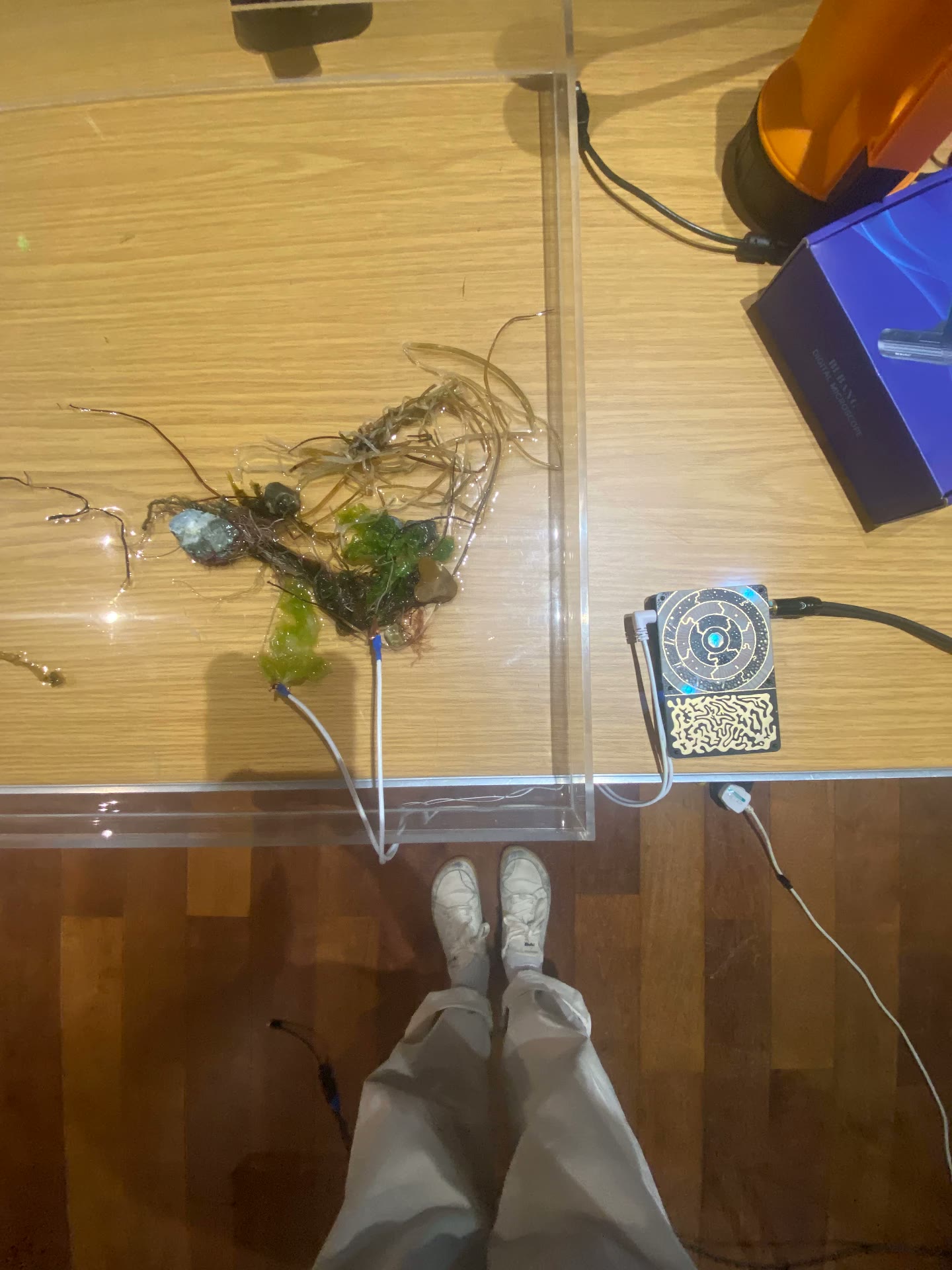
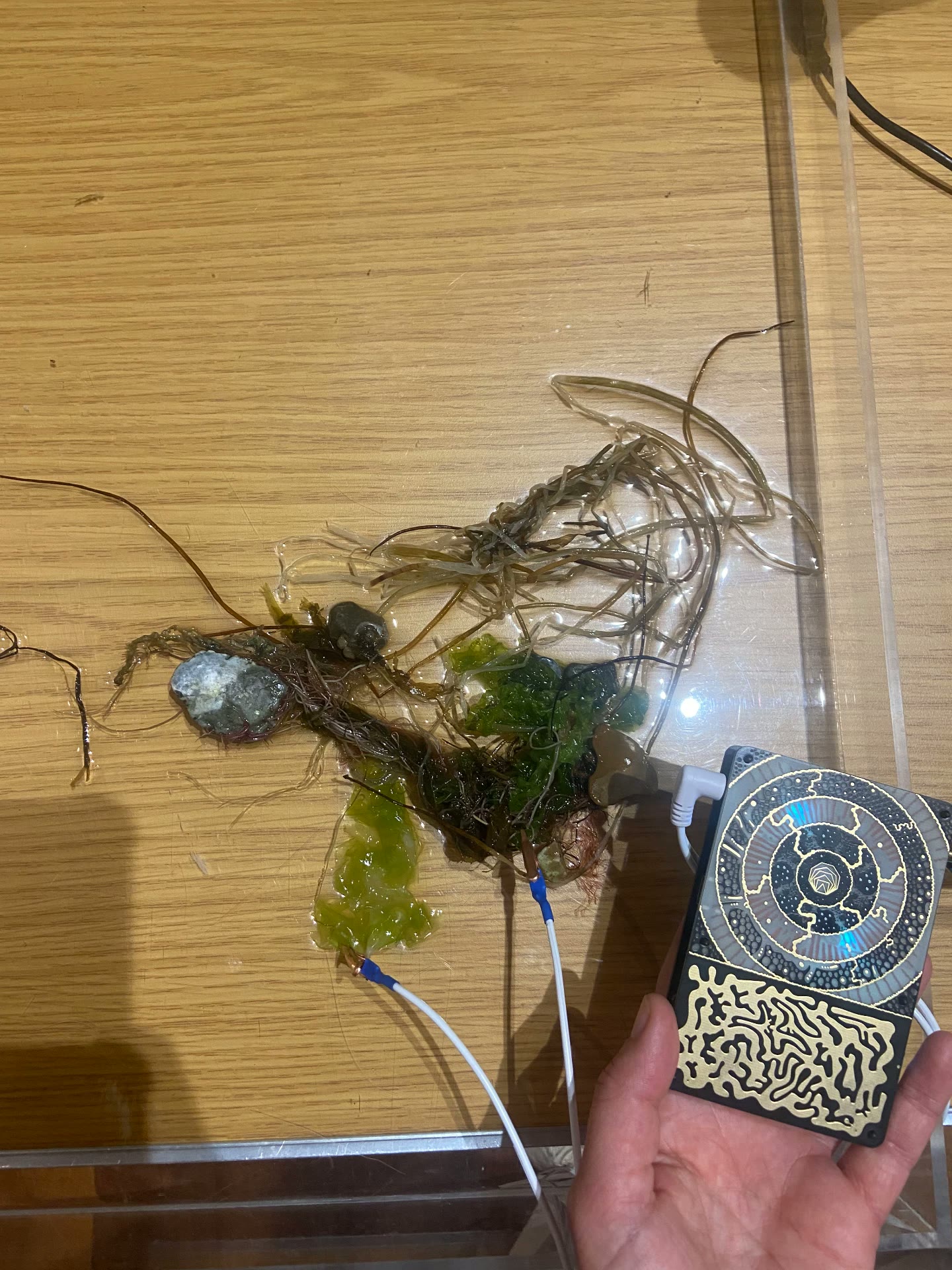
The sound is generated with an Instruo Pocket SCÍON, a portable biofeedback instrument. Sensor clips are attached to a living organism and an analogue pulse oscillator tracks the tiny changes in electrical resistance across the plant. Those fluctuations set the frequency of the pulse, and the onboard sound engine turns that data into evolving, five-note polyphonic soundscapes — with MIDI and OSC out, so the plant can drive other instruments and visuals too. The seaweed is quite literally making the music.
This way of generating sound is new to my practice, and it changes what the show is. We would want the audience to see it: the foraging, the clipping, the tank — everything, image and sound, created live in front of them.
An idea we want to keep: collect seaweed local to wherever the piece is performed, so each place gives the show its own voice and its own sea.
We also discovered that some seaweed is UV reactive. We want to test this properly and build a UV sequence — hidden life and hidden worlds revealed, which mirrors exactly what we were exploring all week: what is under the surface, and what it costs to bring it up.
Seaweed clipped up to the SCÍON, playing live.Sensor clips on the seaweed, playing the room.The tank as a living instrument.The rig: tank, seaweed, clips, SCÍON, microscope.East Head seaweed, clipped up.Foraging at East Head, Sussex.
Design ideas from this R&D
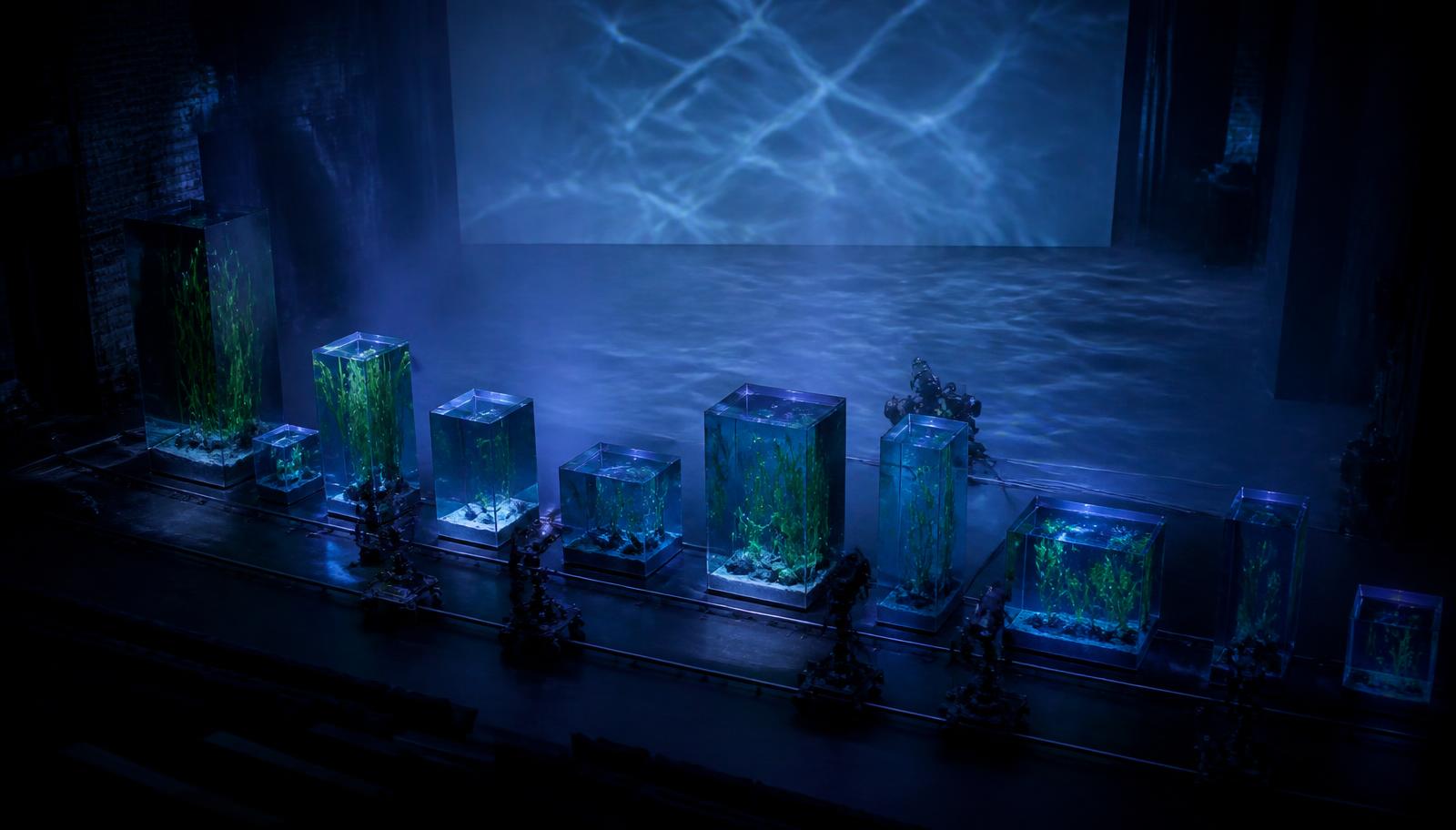
A room of living tanks, and a white space to be projected into
Concept for the set — living tanks, miniature puppets, slide-mounted cameras and a white stage washed in projected water.
Several large tanks
The set is water. A group of large tanks holds the world of the piece, lit and filmed from every side, so the sea is physically present in the room rather than only projected.
A miniature diorama of the story
One tank holds a miniature diorama of the selkie story, added to as the piece develops — the world literally built in front of the audience over the course of the show.
A micro-cinema rig
Projectors, lights and cameras on tiny sliding dollies move around the tanks, so a camera move on a miniature becomes a sweeping shot filling the whole space.
Living seaweed, miniature puppets
All the seaweed is alive and generating the sound. Miniature puppets can enter the tanks and inhabit that living landscape.
A tank big enough for a body
One tank is large enough for a performer to semi-submerge in — the human body entering the same water as the miniatures.
White space to move in
The rest of the stage is large and white, so the performers can move freely and be projected onto — the filmed tiny world washing across a full-size body.
Where it goes next
The next phase: towards an end for a full show
This wasn't a full show — it was a first play. The next phase runs over an eight-month timeline in 2027, ending with the show fully formed and ready to take to partners to produce.
Step 01
Match funding & partners
First: securing £2–3k of match funding, which unlocks an Arts Council England application under £30k, and finding venues and co-producers excited by innovative visual theatre.
↓
Step 02
Research in Scotland
Scotland as the research place for the folklore and for British Isles seaweed — the home of much of the selkie tradition, foraging and listening to the sea it came from. Sitting down with storytellers, both traditional keepers of the selkie tales and those telling wider, more expansive versions of them, so the piece is built from the living story as well as the archive. Alongside it, reaching out to the Farnham Folklore Society and running a local XR workshop.
↓
Step 03
Puppeteers & creatives in the space
Bringing other puppeteers and creatives into the room to make the piece together — puppets, tanks and projection in the same space, testing how many hands this form needs — ending with a sharing at Farnham.
↓
Step 04
XR block & workflow
A further XR block at the Play office to sort the technical workflow and prep line: hand tracking, mocap, live camera and projection running as one reliable system, plus UV-reactive seaweed testing and creative captioning projected inside the tank.
Eight months across 2027 — and at the end of it the show is full and ready to approach partners to produce.